Yuki Hirayama

Digital Work

Signal Series

A series of research-driven digital studies exploring how people, industries, and cultural signals reveal larger patterns. Each project moves from research and synthesis through information design to a responsive web and mobile experience.

Field Signals

How far can automation go?
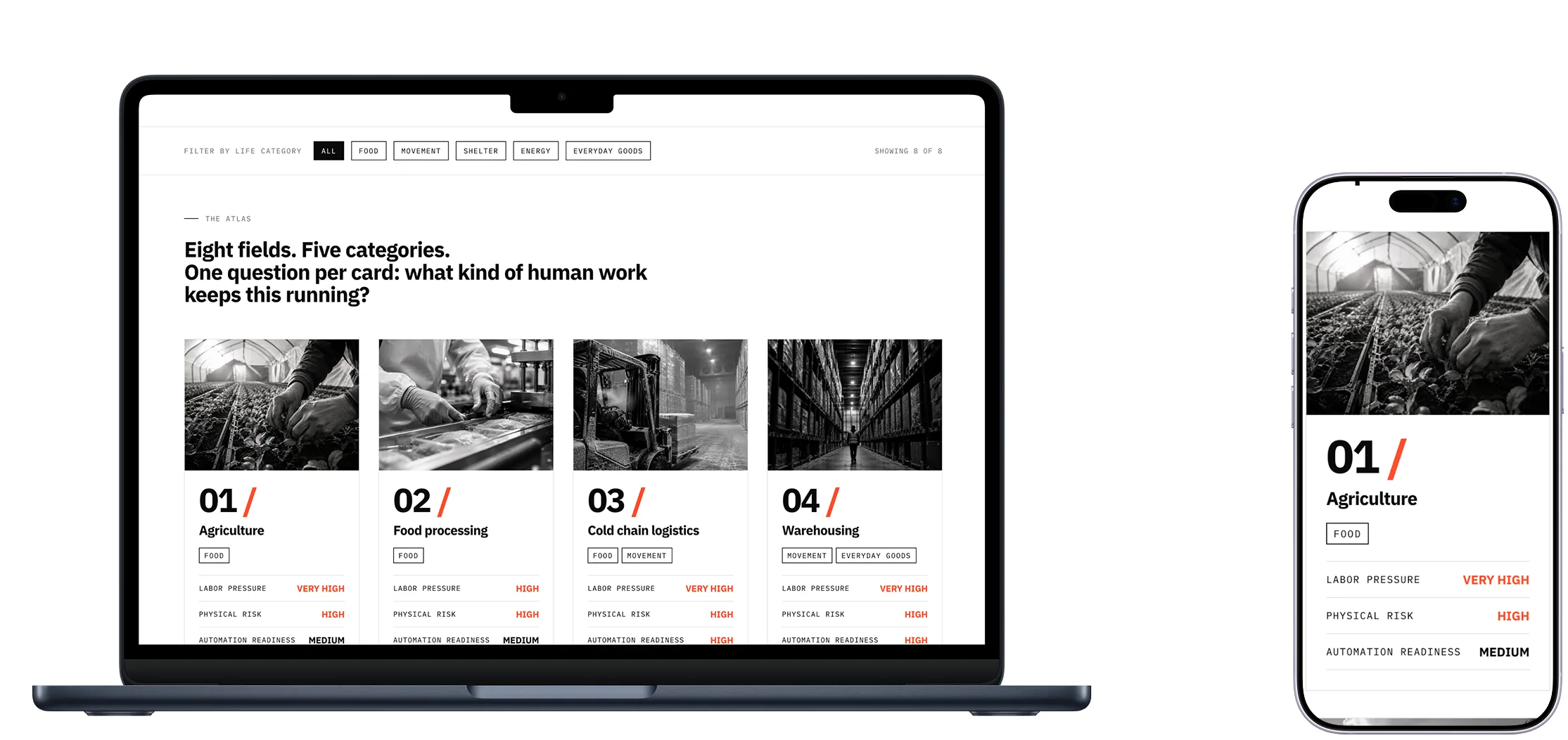
Field Signals on laptop and phone

Overview

Since my time at Mujin, I’d wondered how far automation could realistically go. I finally took the time to investigate — mapping where meaningful business opportunities may exist, grounded in data. This is what I found.

Results

Eight fields. Five categories. One question per card: what kind of human work keeps this running? The gap is widest where labor pressure and physical risk are both very high but automation readiness is still low — construction above all. The opportunities sit not in replacing the work, but around the checks, handoffs, and judgments that keep it running.
field-signals.vercel.app
Presence Signals

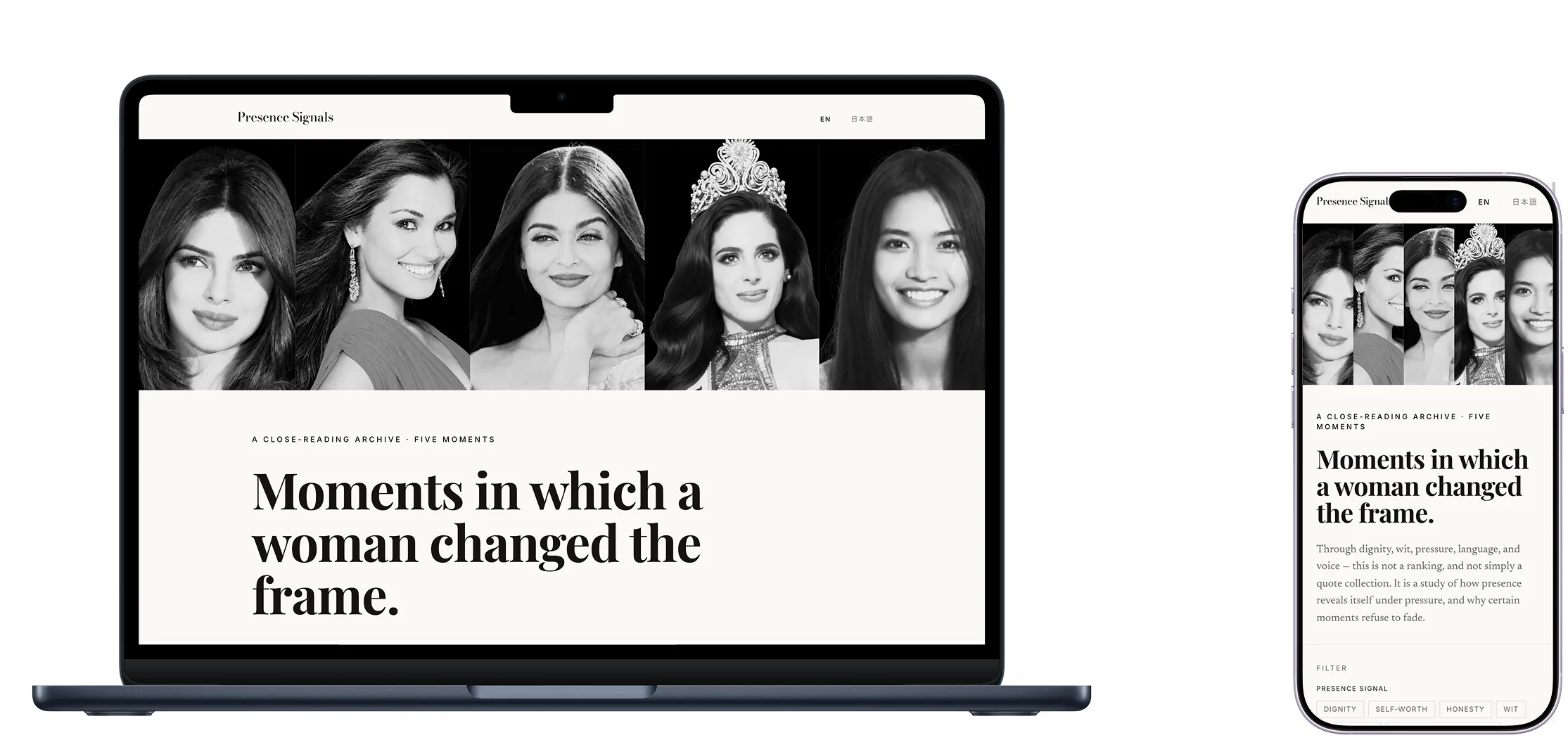
Moments in which a woman changed the frame.

Presence Signals on laptop and phone

Overview

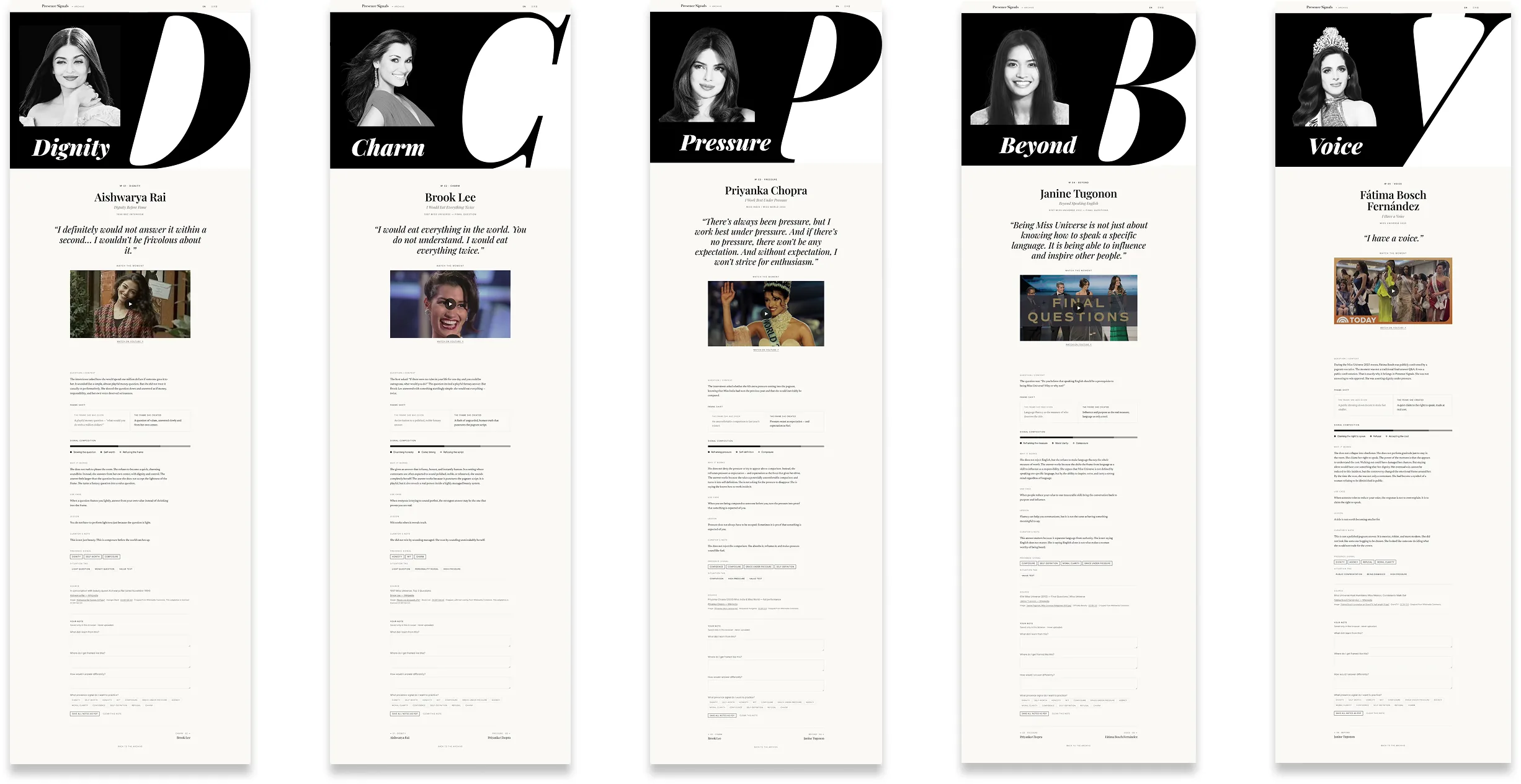
Researched, designed, and built an editorial microsite examining how women project presence under extreme public pressure. All five women are winners of major international pageants, and most of the selected moments came from pageant Q&As that I had personally remembered for their lasting impact. The project looks at what made those moments endure — through dignity, wit, conviction, and self-expression.

Five case pages of Presence Signals

Results

The moments that endured were not simply about beauty, but about character revealed under pressure: the ability to hold an opinion and say it. That kind of presence has little to do with being liked — and it isn’t simply a gift. It can be trained through attention, practice, and a clear sense of one’s own rights and worth.
presence-signals.vercel.app

Comedy Market Signals

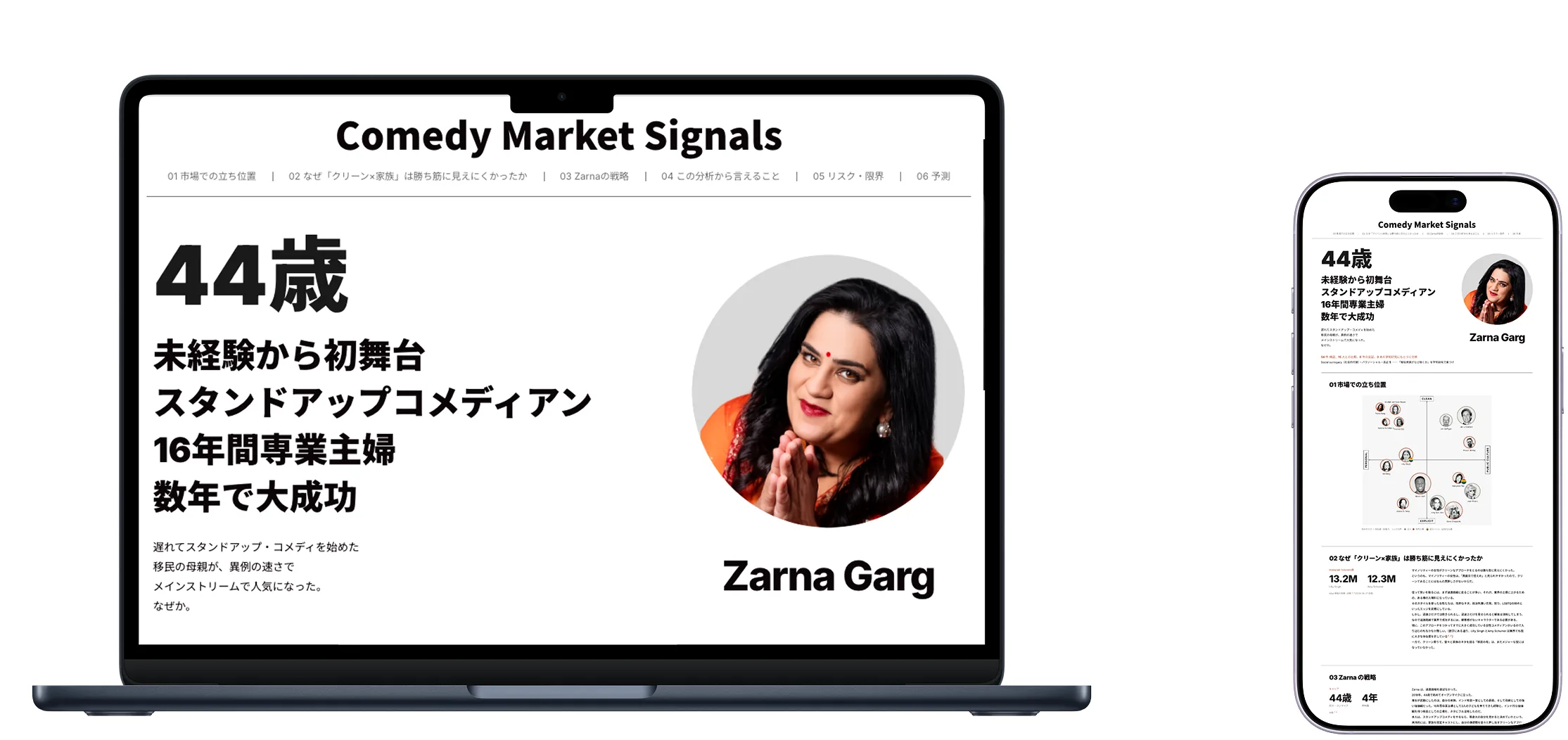
After 16 years at home, she took the stage at 44. Why did her clean, family comedy reach so wide? A market analysis.

Comedy Market Signals on laptop and phone

Overview

A research-driven analysis of how Zarna Garg built — and may sustain — a distinctive position in the U.S. comedy market. The study drew on 54 verified evidence points, comparisons with 15 comedians, 6 counterarguments, and 3 academic studies, examining audience fit, cultural differentiation, business structure, risk, and future IP potential.

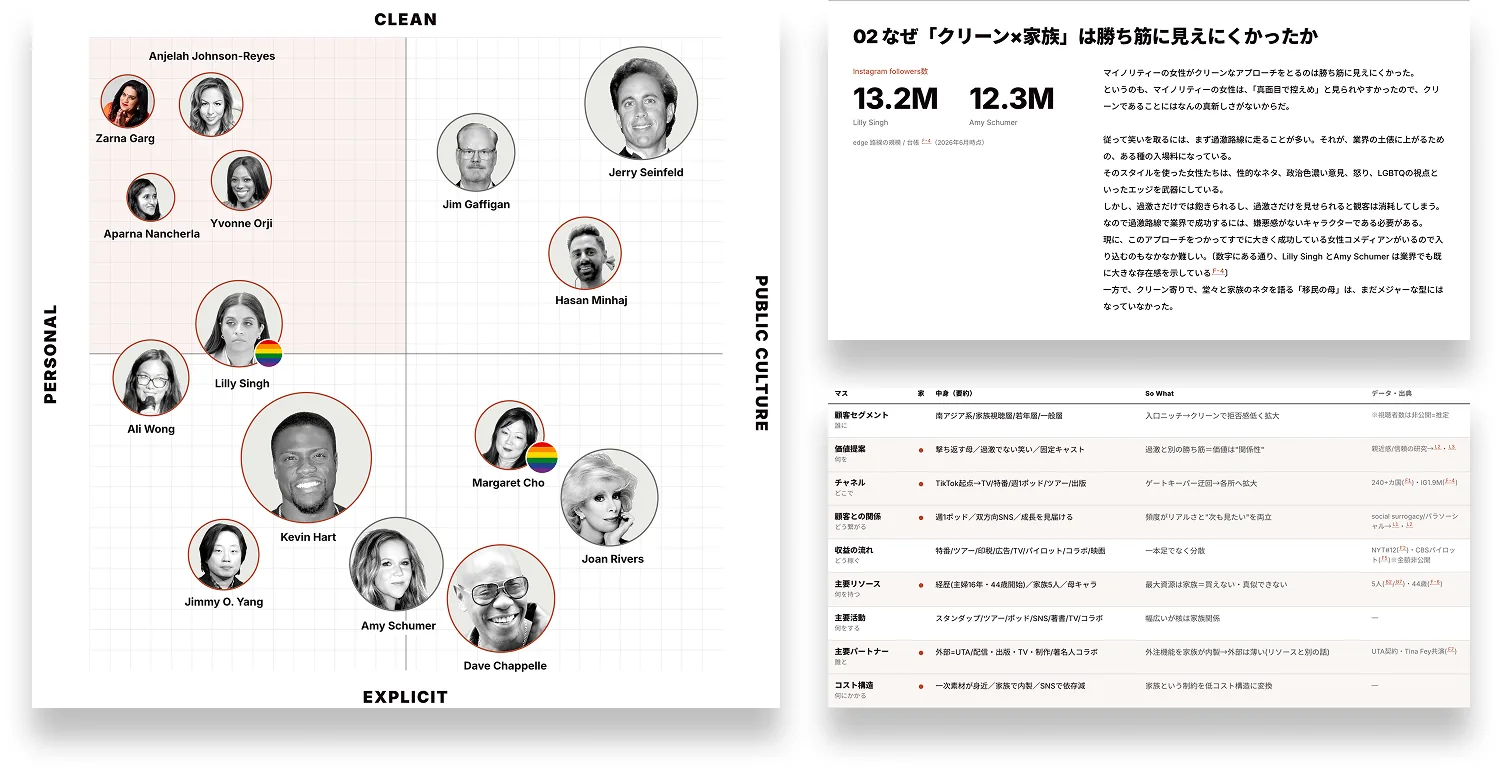
It also used research on social surrogacy, parasocial relationships, and authenticity to test why her family-centered public persona may resonate so strongly with audiences.

Process

Three layers — positioning map, five-step narrative, business model canvas — every claim traceable to the evidence ledger.

Positioning map, key figures and business model canvas

Results

Zarna Garg challenged two assumptions: that decent people are boring, and that a minority voice has to be edgy to stand out. She stepped into the space those assumptions had left open — after 16 years as a stay-at-home mother — and built a distinctive position in strikingly little time, largely by being herself.
comedy-market-signals.vercel.app

Storyline

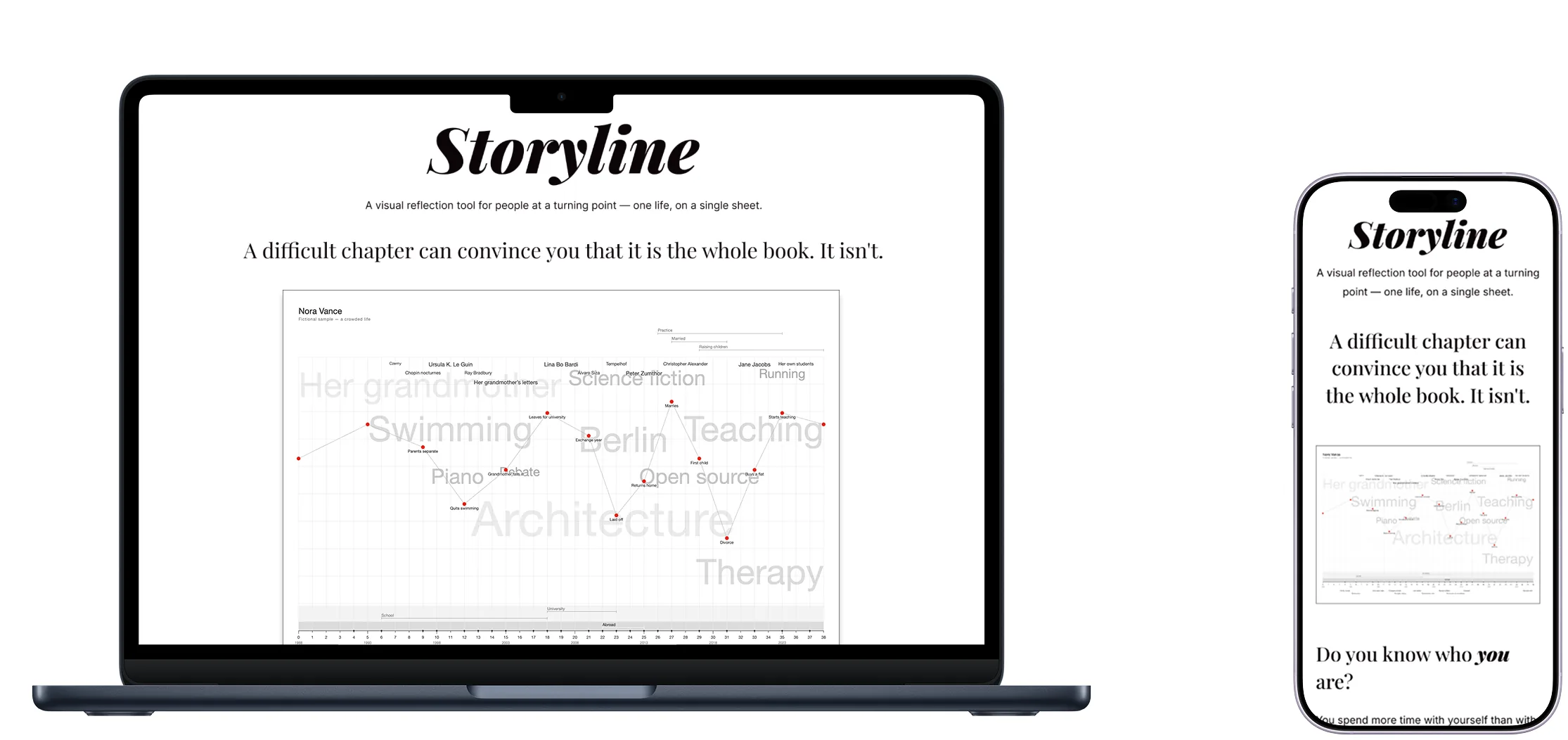
A life, on one sheet — a tool to see yours from a distance.

Storyline on laptop and phone

Overview

A visual reflection tool that maps one life on a single sheet. Influences are drawn by how much they mattered, how long they lasted, and how hard they hit; alongside them run the events, the moves, and a line of how it felt at the time. Made for anyone looking back — a child recording a parent’s life, or you at your own crossroads.

Results

Live as a browser tool: enter a birth year and country, place events as you recall them, print on five paper sizes. PDF export is still in progress.
storyline-eosin.vercel.app/site

VEN

Can an app fix networking at big events? Research said no — so I rebuilt it.

2017

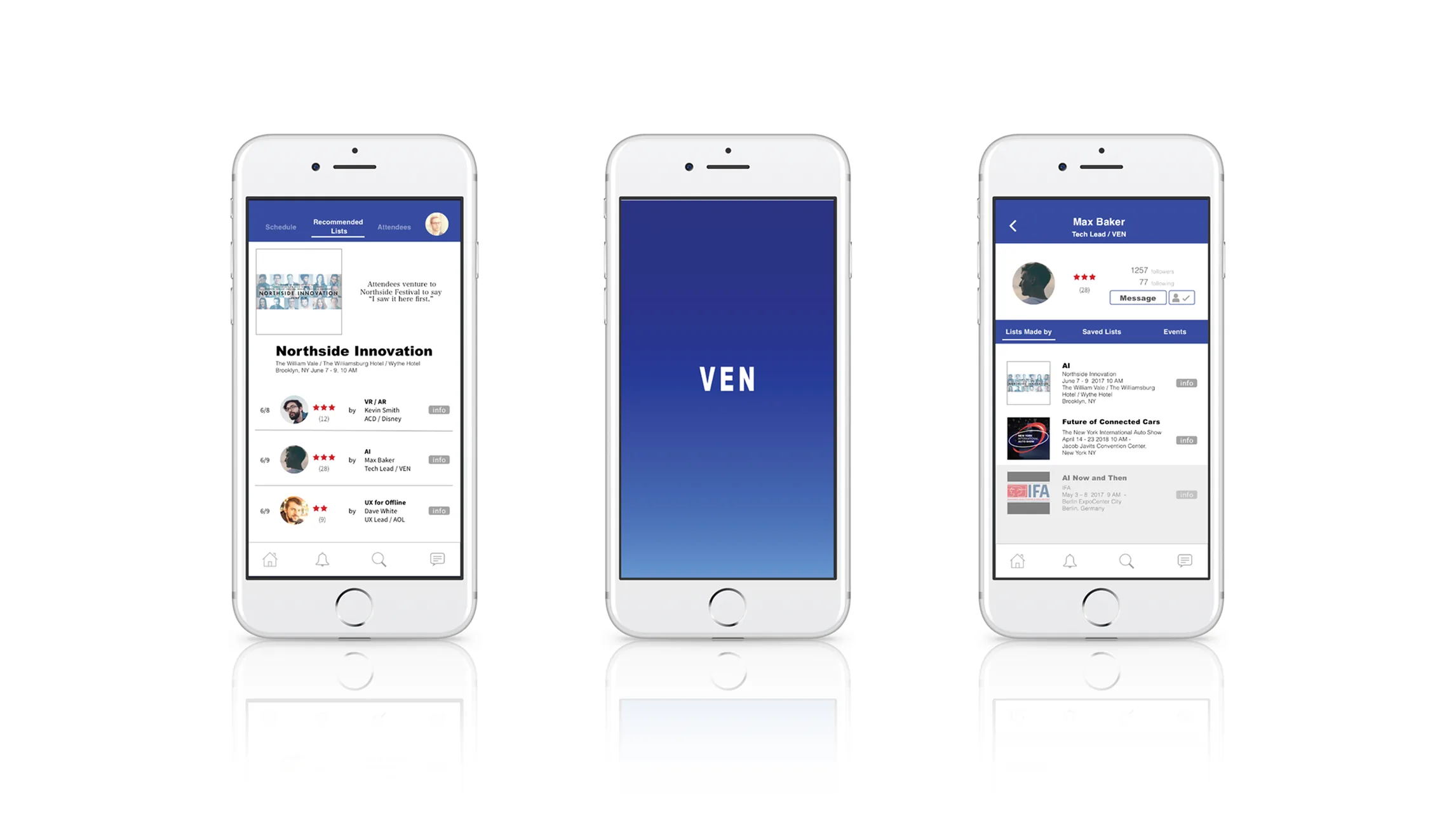
VEN app on three iPhones

Overview

Designed a UX/UI experience for large-scale business events. User research challenged the initial networking hypothesis, leading to a reframed experience focused on helping attendees navigate complex agendas and discover relevant sessions and people. Developed through research, information architecture, prototyping, user testing, and final UI design.

Results

The networking hypothesis failed in testing, so the product was reframed around navigating the event itself — agenda, sessions, people worth meeting. Iterated through wireframes to a tested MVP.

Selected Works