Challenge
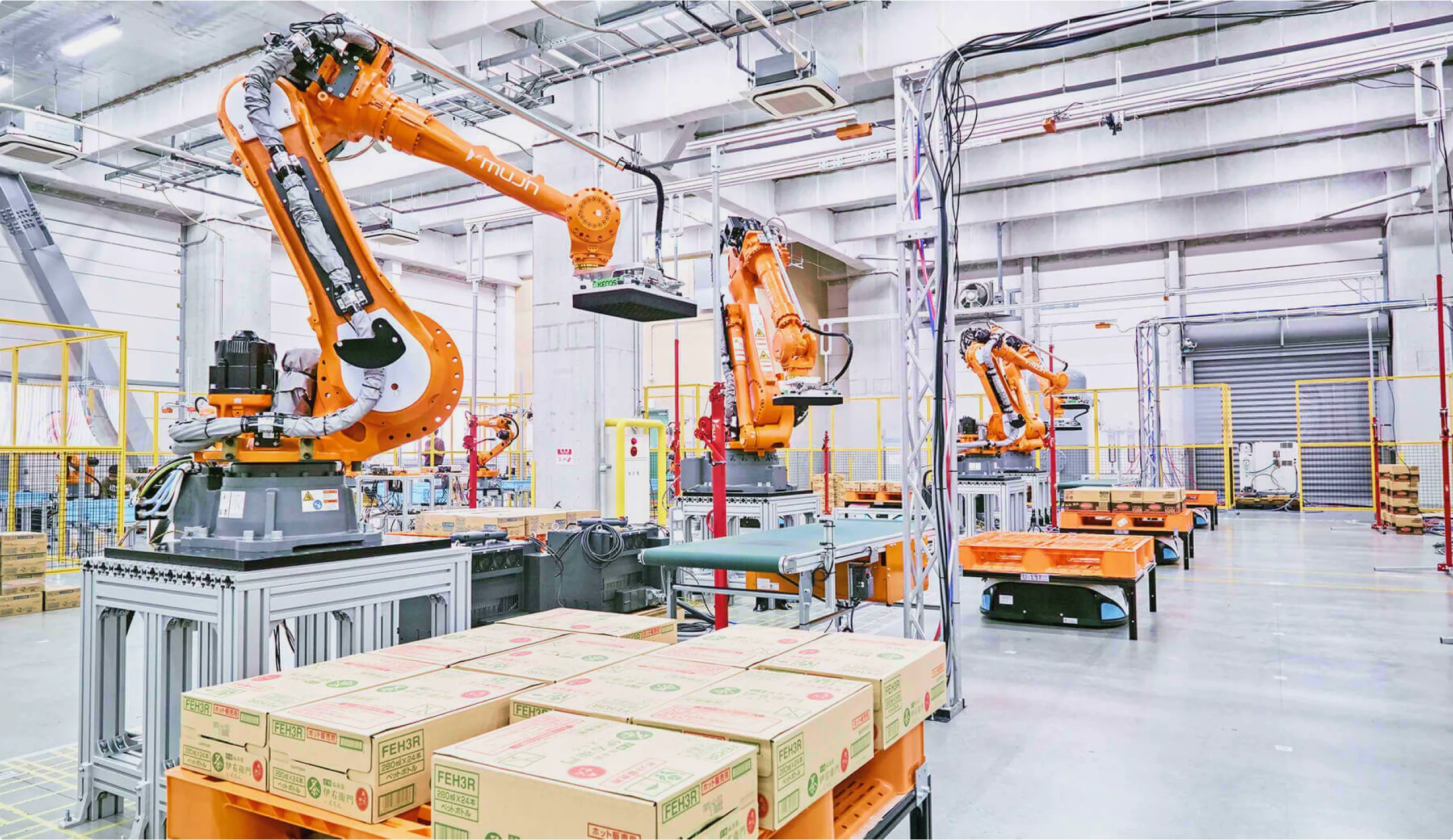
The sophistication of the technology had outpaced the UI/UX of the robot operating system, making usability and learnability for on-site operators a critical challenge directly tied to business growth.

Process
I began by defining five key personas, mapping users with vastly different goals and levels of technical expertise — from highly specialized developers and system integrators to factory managers and frontline operators.
Process
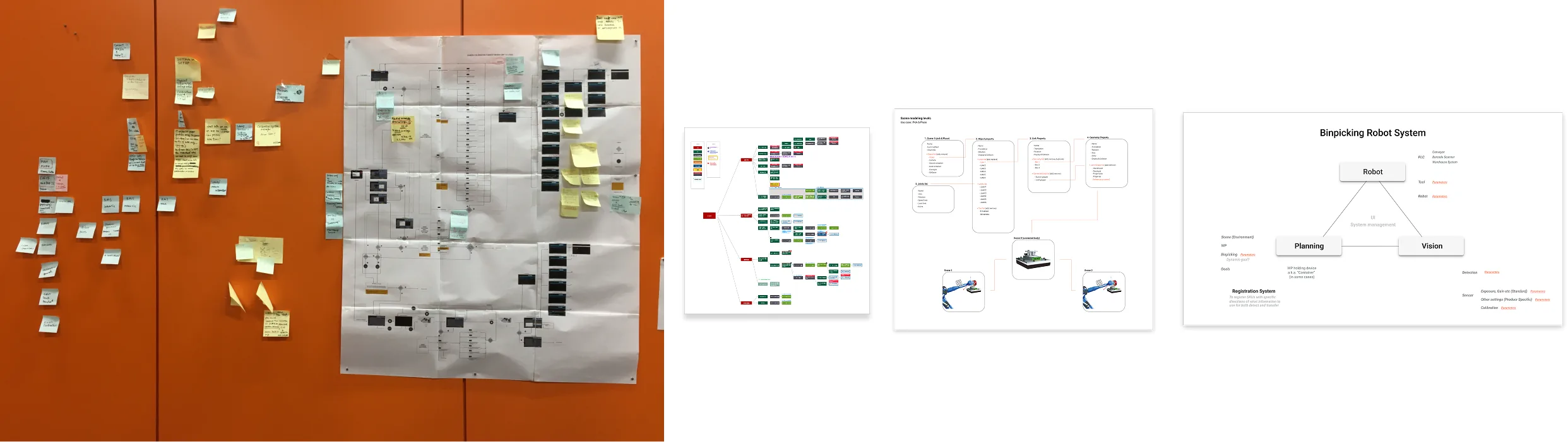
Mapped and visualized complex user flows and robotics architecture, creating a shared language to bridge the gap between developers and frontline users.
Developed and shared a simplified view of the broader robotics ecosystem to help technically fluent teams stay grounded in the user’s perspective.
Design constraints
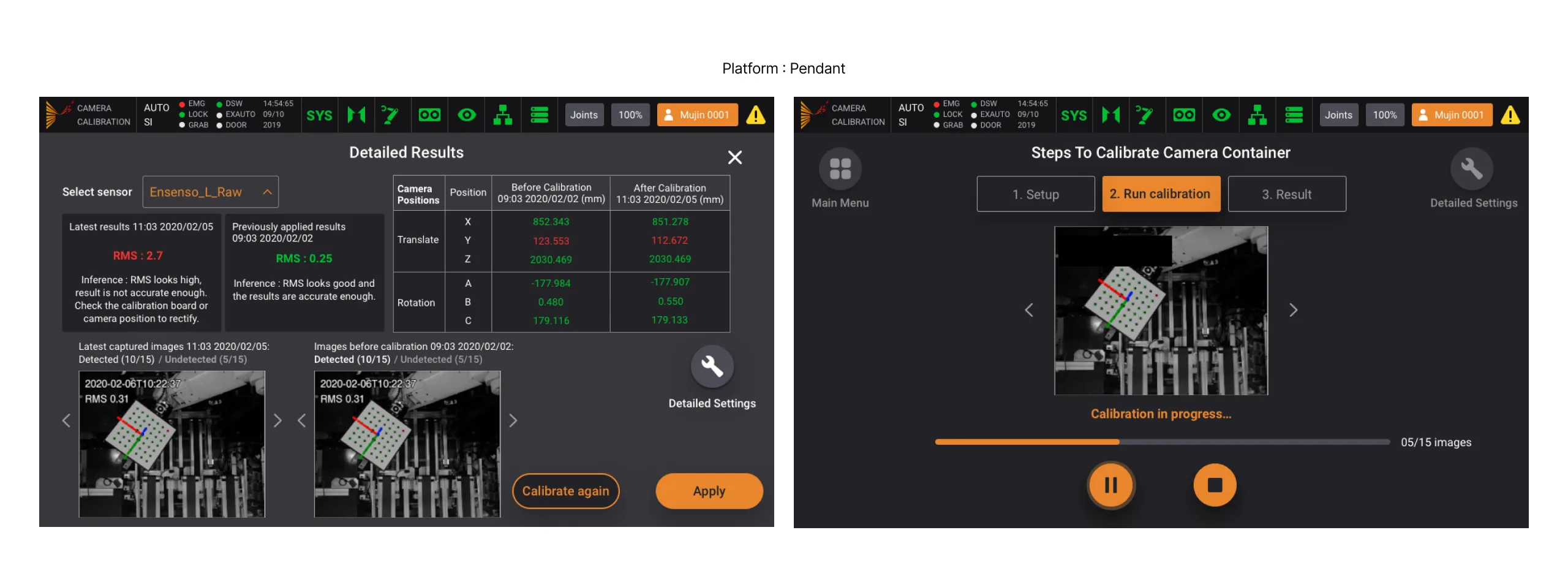
Designed within an established interface system and the fixed screen of a teach pendant. Operators work directly on the screen by touch, so safety and operability came first, with controls designed to be large, clear, and easy to use.
Results
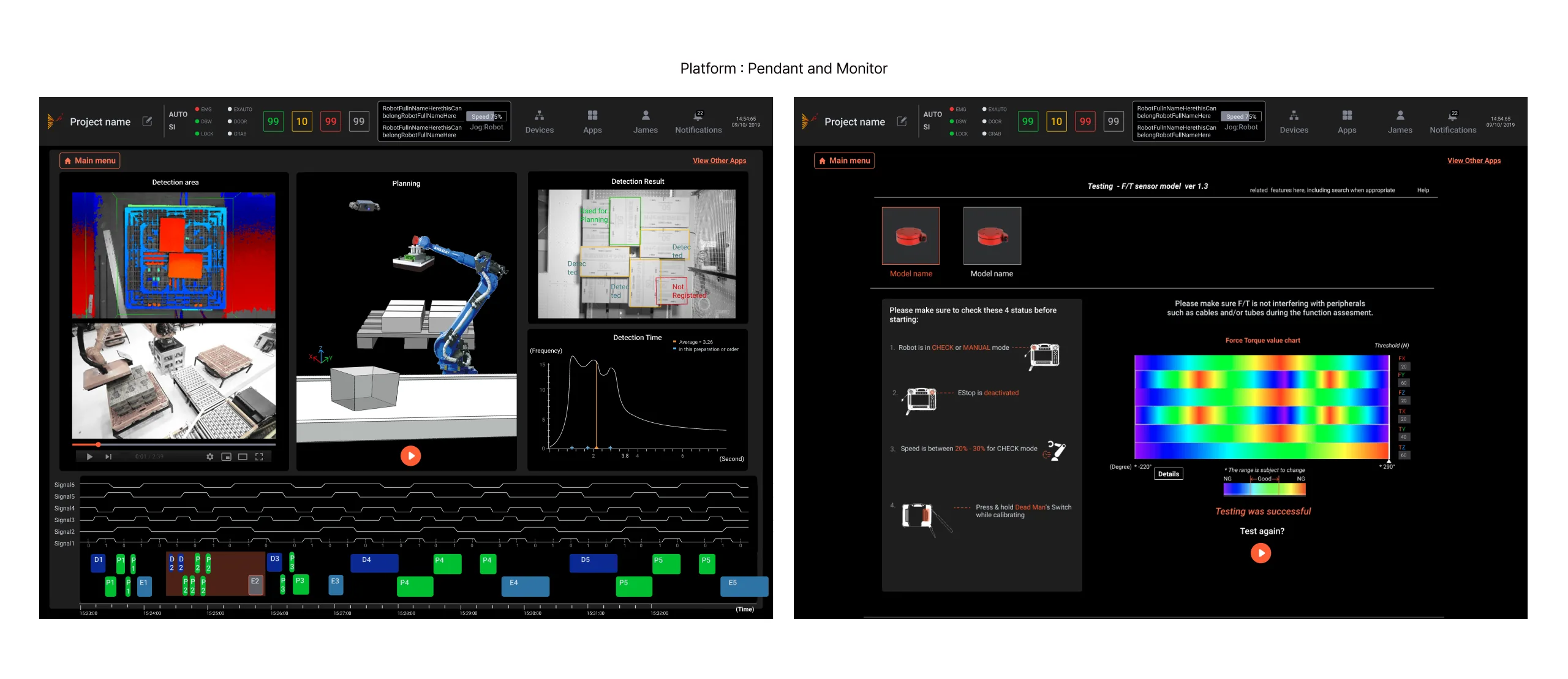
Built and led the design function across a wide range of products and experiences within a complex robotics ecosystem, partnering closely with engineering teams responsible for the underlying technology. We focused on improving usability, learnability, and clarity while maintaining consistency across the broader product experience. Across workflows tied directly to physical processes on the factory floor, the goal was to make highly technical systems easier to understand and operate. The screens shown here are a few from the larger system.